
Epiphany (Timket)
EPIPHANY (TIMKET)
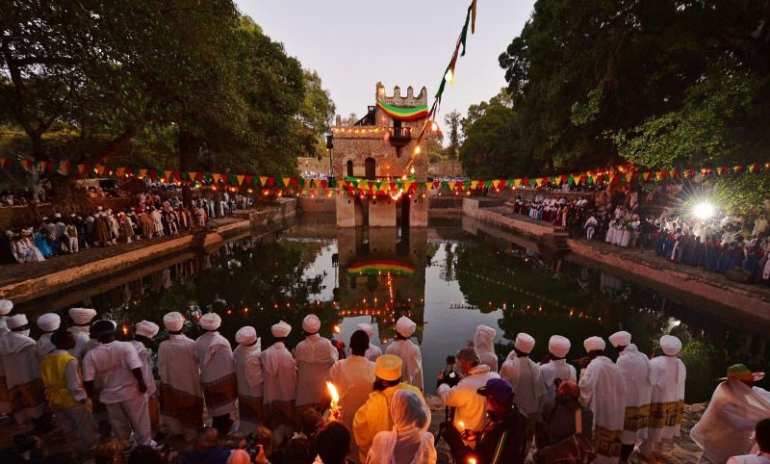
Epiphany, known as "Timket" in Amharic, is Ethiopia's most spectacular and colorful religious festival, celebrated annually on January 19th according to the Ethiopian Orthodox calendar. This magnificent celebration commemorates the baptism of Jesus Christ in the Jordan River by John the Baptist, and it represents one of the most important holy days in the Ethiopian Orthodox Church, drawing hundreds of thousands of faithful participants and visitors from around the world.
The festival begins on the eve of Epiphany with elaborate processions called "Ketera," where replica Arks of the Covenant (Tabots) are carried from churches to nearby bodies of water. These sacred replicas, wrapped in ornate brocades and silks, are carried on the heads of priests under colorful ceremonial umbrellas, accompanied by thousands of white-robed worshippers singing hymns and chanting prayers. The processions create a mesmerizing spectacle of faith, tradition, and community unity that has remained unchanged for centuries.
The climax of Timket occurs at dawn on the main festival day, when the highest-ranking priest blesses the water by dipping a golden cross into it and sprinkling the blessed water on the assembled crowd. Many faithful believers then plunge into the water for baptism or renewal of their baptismal vows, believing that the blessed water has healing and purifying powers. The ceremony is particularly spectacular in places like Gondar, where the festival takes place around the historic Fasilides Bath, and in Addis Ababa at Jan Meda, where massive crowds gather for this sacred ritual.
Beyond its religious significance, Timket serves as a vibrant cultural celebration that showcases Ethiopia's rich Orthodox Christian heritage. The festival features traditional music, dancing, and the wearing of traditional white cotton garments called "habesha kemis" and "netela." Young people often use this occasion for socializing and courtship, while families come together to share traditional foods and celebrate their faith. The three-day celebration concludes with the ceremonial return of the Tabots to their respective churches, marking the end of one of Ethiopia's most beloved and spiritually significant festivals.