Hidar Tsion
HIDAR TSION
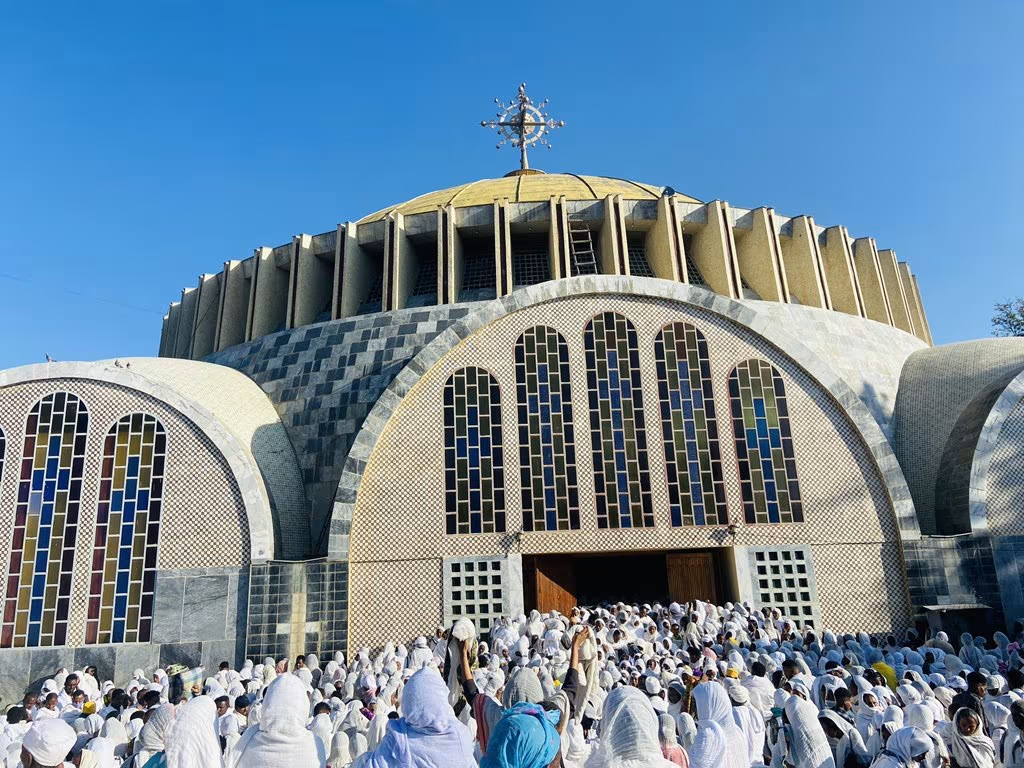
Hidar Tsion is one of Ethiopia's most sacred and deeply revered religious festivals, celebrated on November 21st according to the Ethiopian Orthodox calendar. This ancient celebration honors both the Ark of the Covenant (Tsion) and the Virgin Mary, representing a unique fusion of Old Testament tradition and Christian devotion that is central to Ethiopian Orthodox faith. The festival's name combines "Hidar," referring to the Ethiopian month, and "Tsion," meaning Zion or the Ark of the Covenant, reflecting its profound spiritual significance in Ethiopian religious culture.
The festival has its roots in Ethiopia's claim to house the original Ark of the Covenant in the Church of Our Lady Mary of Zion in Axum. According to Ethiopian tradition, the Ark was brought to Ethiopia by Menelik I, the legendary son of King Solomon and the Queen of Sheba, making Ethiopia the guardian of this most sacred biblical artifact. Hidar Tsion celebrates this divine heritage and Ethiopia's special covenant with God, while also honoring the Virgin Mary's role in Christian salvation, creating a celebration that bridges Jewish and Christian traditions in a uniquely Ethiopian way.
The celebration of Hidar Tsion is marked by elaborate processions where replica Arks of the Covenant (Tabots) are carried from churches throughout Ethiopia, accompanied by priests in ornate vestments, deacons with colorful ceremonial umbrellas, and thousands of faithful worshippers dressed in traditional white garments. The processions are accompanied by ancient chants, the beating of traditional drums (kebero), and the ringing of church bells, creating a mystical atmosphere that transports participants back to biblical times. The largest and most spectacular celebration takes place in Axum, where pilgrims from across Ethiopia and beyond gather to witness this sacred ceremony.
Beyond its religious significance, Hidar Tsion serves as a powerful expression of Ethiopian identity and cultural continuity. The festival reinforces Ethiopia's unique position as an ancient Christian nation with deep biblical connections, while also celebrating the country's rich Orthodox traditions that have been preserved for over 1,500 years. Families gather to share traditional foods, exchange blessings, and participate in communal prayers that strengthen social bonds and spiritual devotion. The festival represents not only a celebration of faith but also a reaffirmation of Ethiopia's sacred heritage and its people's enduring connection to their ancient religious traditions.