Karo People
KARO PEOPLE
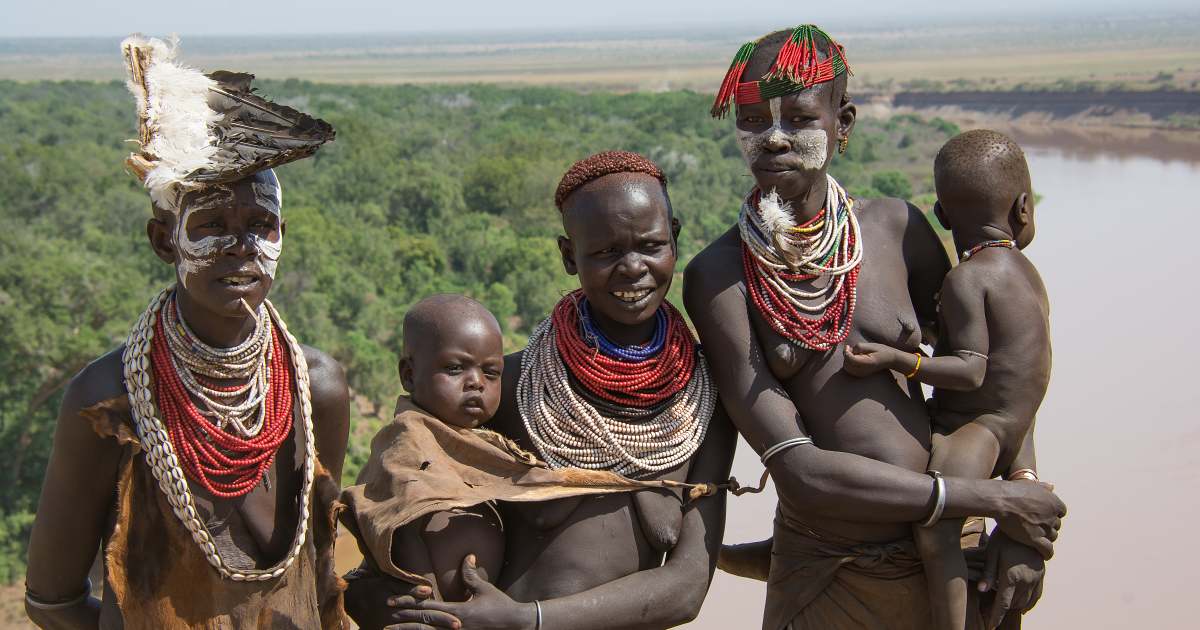
The Karo people are one of the smallest yet most artistically sophisticated ethnic groups in Ethiopia, inhabiting the eastern banks of the Omo River in the South Omo Zone. Despite their small population of around 1,000-3,000 individuals, the Karo have developed one of the most elaborate and beautiful body decoration traditions in Africa, making them renowned for their artistic expression and cultural richness.
The Karo are master artists of body painting and decoration, using natural pigments made from white chalk, yellow mineral rock, iron ore, and charcoal to create intricate patterns and designs on their bodies. These elaborate decorations serve multiple purposes: they enhance beauty, indicate social status, mark special occasions, and provide spiritual protection. Both men and women participate in this artistic tradition, with each design carrying specific cultural meanings and significance.
Living along the fertile banks of the Omo River, the Karo practice a mixed economy of agriculture, pastoralism, and fishing. They cultivate crops such as sorghum, maize, and beans during the rainy season, while also raising cattle and goats. The river provides fish and supports their agricultural activities through seasonal flooding that enriches the soil. Their intimate relationship with the Omo River is central to their cultural identity and survival.
Karo society is organized around age-grade systems and strong community bonds. They are known for their elaborate ceremonies, including initiation rites, harvest festivals, and ritual dances that showcase their artistic traditions. The Karo people face significant challenges from modern development and environmental changes, making the preservation of their unique culture increasingly important for maintaining one of Africa's most distinctive artistic traditions.